
Why is the KIM-1, a slow and minimal Computer so relevant for computing history?
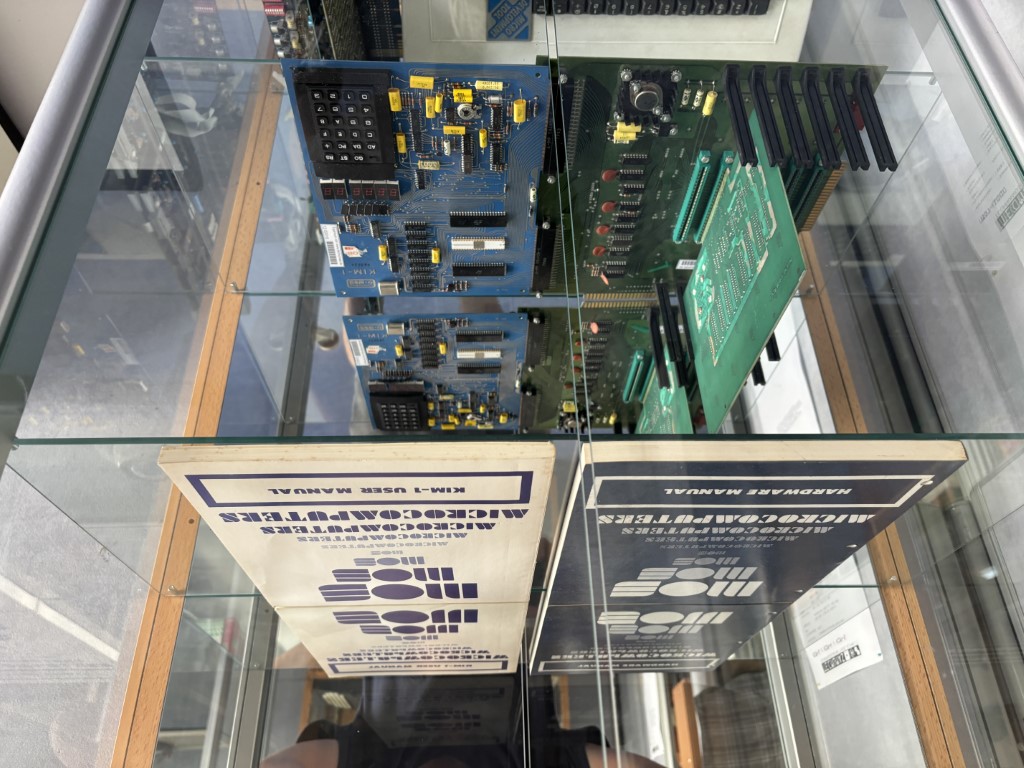
Let the pope Jim Butterfield tell you:
https://groups.google.com/g/comp.sys.cbm/c/kznHM1Mg4U0/m/D3RQVOD0OUsJ
Jim Butterfield
19.08.1999, 09:00:00
Shortly after MOS Technology, Inc. developed the 6502 processor chip, they designed a single-board computer called the KIM-1 to show off the capabilities of the chip family, and to allow engineering prototyping.
Apart from the obvious things that a computer must have (CPU, RAM, I/O chips), they threw on the board just about anything that they thought someone might like to have as an interface. For example: the basic monitor program allowed a hex keypad input (hey, KIM stands for Keyboard Input Monitor) and 6-digit LED display; it had a bit-banger audio output which could be used to store programs on a cassette tape unit; it had a corresponding PLL audio input line that would read back from such a cassette tape; and it had teletype input/output facilities (again, bit-banger). Its basic RAM was 1K, supplemented by a little extra RAM in the 6530 I/O chips.
A feature of the board that many users never realized, perhaps, is that all on-board devices were selectable via external connections. What that means is that you could plug the KIM-1 board into a mother housing, which could, as desired, disconnect any or all of the peripheral circuits, I/O chips, RAM, or the ROMs containing the monitor.
It's likely that MOS Technology designed the board as a tool for engineers, with the message "Hey, design your own system and copy the things you like from this board". I suspect they were quite amazed when sales started to approach the 100,000 mark!
Here's my take on what happened: computer hobbyists discovered that, for the first time, there was a standard preassembled board that would be the same for all users. Back in those days, most computers came as a printed circuit board and a bag of parts which you had to assemble yourself. More, everybody made a slightly different system: some had a CRT display, some had LEDs, some had teletype; varying amounts of memory were fitted, mapped to a variety of addresses; and operating systems were whatever you could scare up.
But suddenly there was the KIM-1. It was fully assembled (although you had to add a power supply). Everybody's KIM-1 was essentially the same (although the CPU added an extra instruction during the KIM-1's production life).
Frank James 'Jim' Butterfield was a Canadian author, journalist and television host. Professionally, he gained experience with mainframes very early on and was infected by the KIM-1 virus in 1976. He wrote dozens of programs for the KIM1 and published the "First Book of KIM" in 1977.
Jim Butterfield passed away in Juni 2007.

Kommentare