
From JB Langstons github page:
Supermon+64 V1.2 By Jim Butterfield et. al.
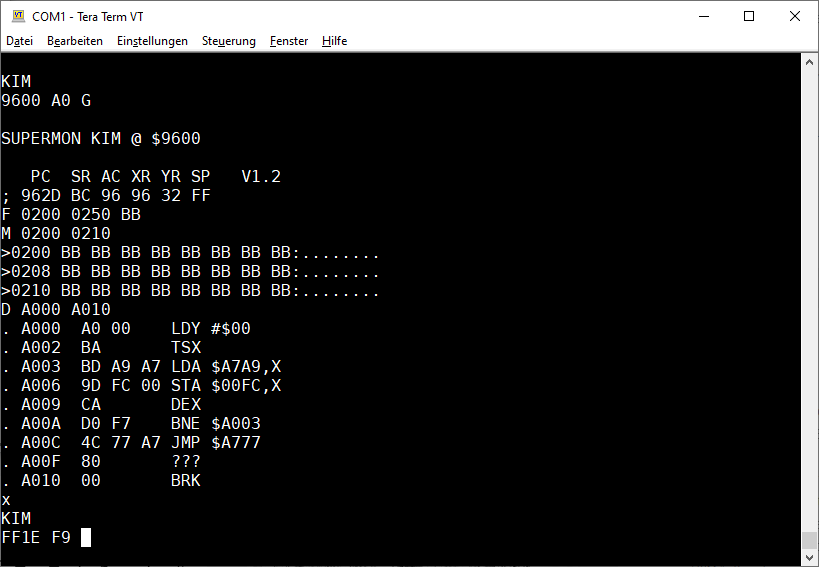
Supermon64 is a machine-language monitor for the Commodore 64. In modern parlance, it would be called a debugger, providing functions including inspecting and altering registers and memory locations; searching, comparing, and transferring blocks of memory; and assembling and disassembling machine code.
Here is a 10-minute video I made demonstrating many of its features: https://www.youtube.com/watch?v=MEjnMt_3wkU
Background
Supermon is closely associated with Jim Butterfield but it had many contributors over the years. The original version of Supermon for the Commodore PET contained the following credits:
- Dissassembler by Wozniak/Baum
- Single step by Jim Russo
- Most other stuff (,HAFT) by Bill Seiler
- Tidied & Wrapped by Jim Butterfield
The earliest documented appearance of Supermon that I could find was in the January 1980 issue of The Transactor. From its origins on the PET, Supermon made its way to the VIC and the Commodore 64. It apparently shares some DNA with the monitor and mini assembler on the Apple II as well as Micromon and MADS monitors on various Commodore computers.
The first version for the Commodore 64 appeared as a type-in program in the January 1983 issue of Compute Magazine. An improved version followed in 1985, updated to include the features in the built-in monitors for the Commodore Plus/4 and 128. This is the version that is preserved here.
Supermon 64 was widely distributed by Commodore User's Groups and included on the demo diskettes and tapes that Commodore provided with their hardware. It was also included as a type-in program in the back of many books on machine language programming, including Rae West's Programming the Commodore 64: The Definitive Guide and Jim Butterfield's own Machine Language for the Commodore 64.
So here's the story:
Jim Butterfield collected and compiled the tools, JB Langston modernized the syntax, Andrew Taylor adapted it for the KIM-1 and I got it running on my KIM-1 by setting all variables in the Zeropage.
Here are the files: https://drive.google.com/drive/folders/1MfJ8tBCGlujdwKzRiodr7I1q8hCc5cOZ?usp=sharing
I even build a ROM version by using the C64s excellent compressing tool "Exomizer". The version is in the archive, too. It loads at $A000, then decompresses at $9600 and runs from there.
exomizer.exe  sfx 0x9600 .\exotest.prg -o test.prg    -n -Di_load_addr=$A000
              orig. start    name orig.   name new   no anim   no sysline  new location
To use exomizer for the KIM-1 convert your binary to a *.prg file using Hans Otten's "convert 8-bit" tool. then crunch it and convert it back to your desired format.
And here's a video demonstration:



Kommentare