Imagine you want to teach kids how computers work.
You can start by running Windows and open a word document, but thats not how computers work... it's how to use computers.
You can tell them about input and output devices, RAM, ROM and storage. But this still doesn't explain why computers work.
Now you maybe want to tell them about the CPU: it is like a black box, where you don't know what is happening (other than "It's calculating").
At this point I suggest to teach about the 6502.
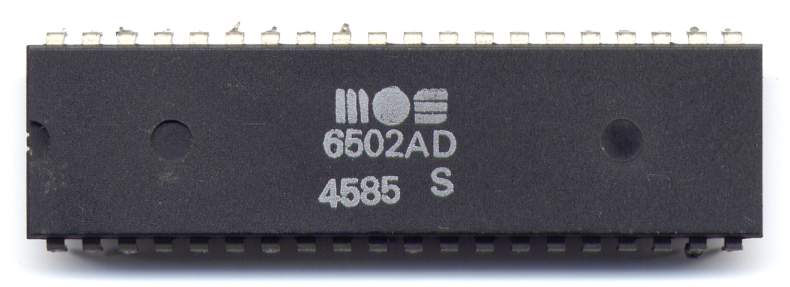
The 6502 microprocessor revolutionized the computer industry completely. The chip Chuck Peddle and his friends at MOS sold for just 20 $ in 1976 was build into nearly all affordable computers and consoles for 10 years.
The 6502 syntax is easy to learn, there are plenty of books about it and if you want to demonstrate it you could use Hans Ottens KIM-1 simulator. You have a steep learning curve and every tool for this is free.
Additionally the kids need to learn about the binary system, the hexadecimal system and boolean operators.
How are programs stored, how are they executed, how does the computer boot up to a point where it understands your input. And so on. Everything is hidden in the KIM-1, this 6502 "demo" device, which was build in 1976 to show the possibilities of the newly developed CPU.
Take a look at this sheet:

Exactly in this document you can see how computers work. That every command equals a number.
What is it? Simply a handwritten program from 1976. Every command is translated by hand into it's corresponding hexcode. You had to look it up in a table:
6502 Microprocessor instant Reference Card
LDA, the command for loading a value into the Akkumulator (a 1 byte memory in your CPU) is "A9".
So, loading the value $30 is "A9 30"
You may need this value in A for comparing it to a memory location or to add it to another number in the next step.
Simple, heh? Everything is about manipulating the memory in some way. Together with adding, subtracting, counting, looping, comparing you get a complete set of commands.
And how the 6205 internally works is described on this excellent page :https://codeburst.io/how-do-processors-actually-work-91dce24fbb44
Sidenote 1: one of my teachers in school had a project to build a 4-bit processor out of transistors in his courses. Starting with flip flops and adders to a full CPU. I was too young to join this course and it always seemed like magic to me. But luckily there is youtube and really good 15 minutes explaination videos ;) So I still may not be able to build a cpu, but I have seen and understand the concept.
Sidenote 2: my son had to learn 6502 assembler in his computer science studies. (something I could help him with :D )
Sidenode 3: The "Evil Mad Scientists" build a 6502 out of transistors. pure magic https://monster6502.com/
I may sound like a white old man (which I am), but this is something kids should learn before graduating. Every day I am impressed what this little CPU engineered in 1975 is capable of.
Webdoc




Kommentare